Following recent news regarding unexpected incidents during surgery, many people have begun to question general anesthesia and the safety of plastic surgery. One of the conditions being discussed is “Anesthesia Allergy” or Malignant Hyperthermia (MH).
In this article, The Art will introduce you to Malignant Hyperthermia, its causes, and what you need to know before undergoing general anesthesia. This information will help patients prepare and provide essential details to their doctors for appropriate treatment.
Key Takeaways
- Malignant Hyperthermia is a condition where the body responds abnormally to certain types of anesthetics. Although rare, it requires careful monitoring during anesthesia and surgery.
- Key symptoms include abnormally high body temperature, muscle rigidity, rapid heartbeat, and abnormal breathing.
- This condition may be related to genetic factors or sensitivity to certain anesthetics. Therefore, you should inform your doctor of your family history and any drug allergies.
- Providing your health and family history before surgery helps doctors assess the risks.
- During surgery, the medical team will closely monitor vital signs to detect any abnormalities and provide timely care.
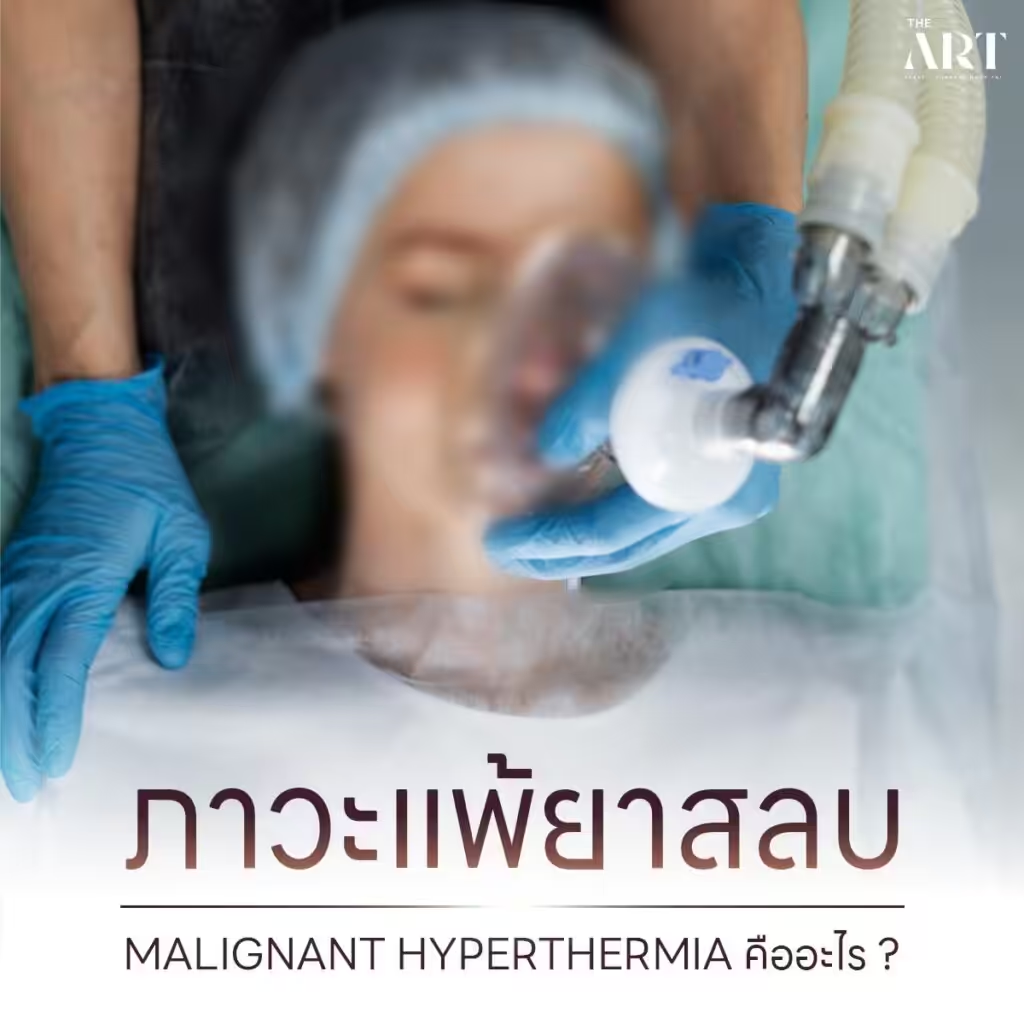
What is Malignant Hyperthermia?
Malignant Hyperthermia is a condition where the body responds abnormally to certain types of anesthetics. This can cause symptoms such as high fever, muscle rigidity, rapid heartbeat, or abnormal breathing. Although rare, it requires close monitoring by the surgical team and anesthesiologists during the procedure.
What are the symptoms of Malignant Hyperthermia?
Malignant Hyperthermia is an abnormal bodily response to certain anesthetics. Symptoms usually occur during anesthesia or shortly after surgery. Observing these symptoms requires monitoring by doctors and anesthesiologists because the patient is in a deep sleep during surgery. Possible symptoms include:
- Abnormally high body temperature
A rapid rise in fever, where body temperature may exceed 40–43 degrees Celsius. - Muscle rigidity
Stiff muscles, especially in the jaw area, which is a key sign of Malignant Hyperthermia. - Rapid or irregular heartbeat
The heart rate increases above normal, potentially accompanied by arrhythmia or a rapid drop in blood pressure. - High carbon dioxide levels in the blood
Breathing may become faster, and abnormally high levels of carbon dioxide may be detected in exhaled breath. - Acidosis
Caused by a rapid increase in muscle metabolism. - Muscle breakdown
In some cases, dark-colored urine may be observed due to muscle breakdown.
Generally, symptoms of Malignant Hyperthermia occur rapidly. Therefore, close supervision by the medical team during surgery is essential to detect abnormalities and provide immediate treatment.
How does Malignant Hyperthermia occur?
The cause of Malignant Hyperthermia is an abnormal response to anesthetics or medications used during surgery. This may be related to a specific sensitivity or a genetic abnormality that causes the body to overreact to anesthesia, such as:
- Genetic factors
Some individuals may carry genes that make them sensitive to certain anesthetics, which can be inherited within families. - Bodily response to certain drugs
Inhaled anesthetics or certain muscle relaxants can trigger this abnormal condition in sensitive individuals.
Although Malignant Hyperthermia is quite rare, providing a health and family history before anesthesia or surgery is vital information that helps doctors assess risks and plan appropriate care.
Is Malignant Hyperthermia dangerous? How severe is it?
Malignant Hyperthermia is a potentially life-threatening condition that can occur during anesthesia. It can affect certain groups of people who respond more strongly to anesthetics than others. While rare, it is a condition that must be monitored during anesthesia or surgery because it can impact vital systems such as the heart, respiratory system, and muscles.
When Malignant Hyperthermia occurs, the body may respond rapidly with symptoms like abnormally high temperature, muscle rigidity, rapid heartbeat, or breathing difficulties. Without proper care, it can lead to complications affecting vital organs.
However, modern plastic surgery and anesthesia are performed under the supervision of anesthesiologists and surgical teams. Vital signs are closely monitored throughout the procedure—including heart rate, blood oxygen levels, and body temperature—to ensure any abnormalities are detected immediately.
Furthermore, a pre-operative health screening—covering drug allergies, underlying conditions, or family history of anesthesia complications—is essential data that helps doctors assess risks and plan care effectively.
Prevention and Monitoring Guidelines at The Art Hospital
The Art Plastic Surgery Hospital has always been mindful of this condition. We have established readiness assessment steps and monitoring guidelines for our patients as follows:
- Pre-operative Patient Assessment
Before surgery, doctors conduct a thorough health history check, including underlying diseases, drug allergies, past anesthesia experiences, and family history of anesthesia complications, to create a personalized care plan.
- Anesthesia Planning
The medical team considers the most appropriate anesthesia method for the patient’s physical condition and evaluates various risk factors to minimize the chance of adverse reactions.
- Monitoring Systems During Anesthesia and Surgery
During surgery, the patient’s vital signs are continuously tracked via monitoring systems, such as:
- End-Tidal CO2 monitoring to assess carbon dioxide levels from the respiratory system. If abnormalities or abnormally high CO2 levels are found, this data is used to evaluate the patient’s condition.
- Monitoring body temperature, heart rate, and observing for muscle rigidity during surgery, which are key warning signs for Malignant Hyperthermia.
- Emergency Care Readiness
In cases where Malignant Hyperthermia is indicated or suspected, the medical team can follow medical protocols, such as:
- Stopping medications that may be related to the condition.
- Providing oxygen at appropriate concentrations.
- Reducing body temperature.
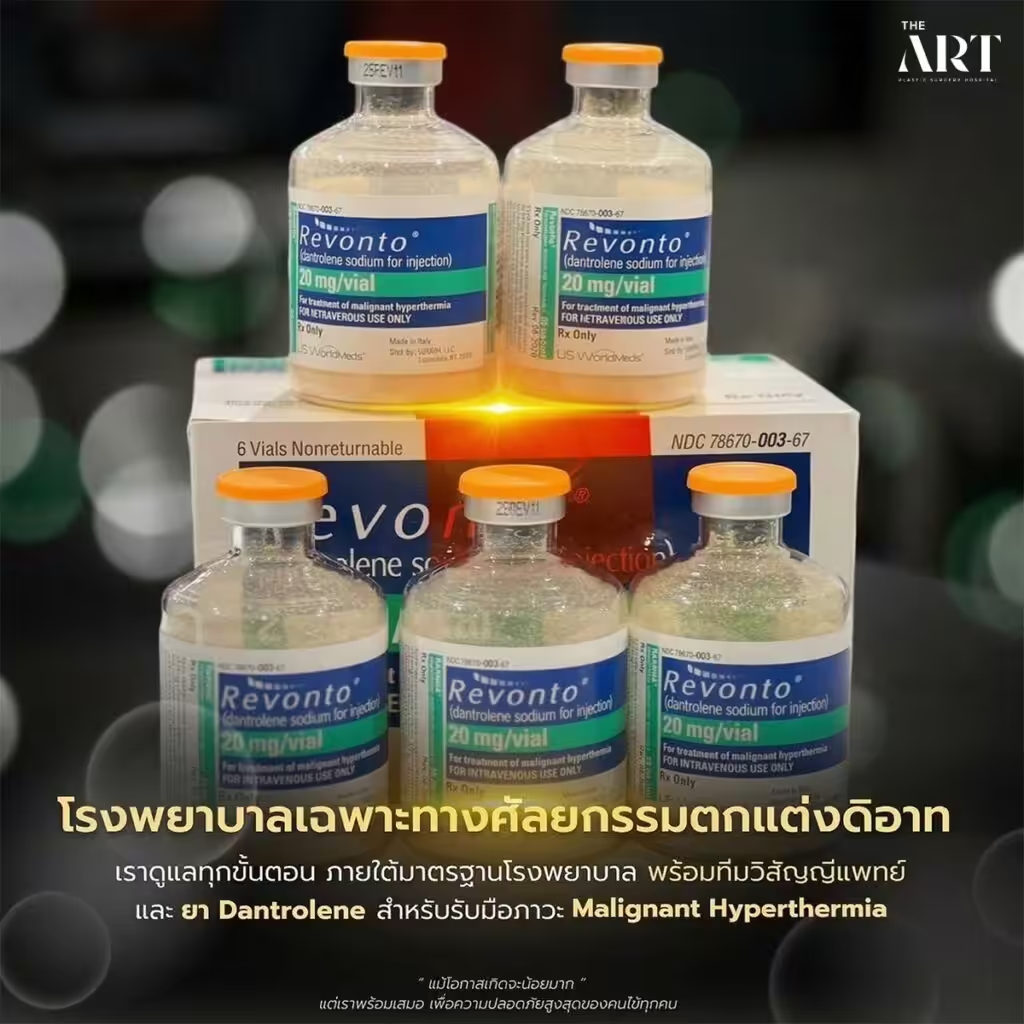
- Using specific treatment medications, such as Dantrolene.
The facility prepares necessary medications and equipment to care for patients if this condition occurs during surgery and has protocols for transferring patients to affiliated medical centers.
- Post-operative Care
After surgery, patients are monitored in the recovery room for vital signs and any abnormal symptoms that may occur post-anesthesia, as Malignant Hyperthermia symptoms can sometimes manifest after the procedure is finished.
All types of plastic surgery carry different levels of risk. The Art prioritizes every stage of the treatment process, from pre-operative risk assessment to intra-operative monitoring and post-operative care.
Summary: Malignant Hyperthermia Symptoms, Risks, and Intra-operative Monitoring
Malignant Hyperthermia is a rare but critical condition that must be monitored during anesthesia, as it can rapidly affect various body systems. Therefore, providing complete health information before surgery, along with risk assessment and vital sign monitoring during the procedure, is essential for anesthesiologists and medical teams to plan appropriate care.
Frequently Asked Questions About “Anesthesia Allergy”
Can Malignant Hyperthermia be treated?
If Malignant Hyperthermia occurs, it requires rapid treatment by a medical team. A specific medication used for immediate treatment is Dantrolene. Afterward, patients should inform doctors of this history before any future treatments or surgeries.
Is an anesthesia allergy different from a typical drug allergy?
Anesthesia allergy (Malignant Hyperthermia) differs from typical drug allergies as it involves the body’s internal mechanisms responding to certain anesthetics, often linked to genetic factors.
Who is at higher risk for Malignant Hyperthermia?
Those with a family history of anesthesia complications or individuals with certain muscle diseases. Informing your doctor of your health history before surgery is therefore crucial.
What should I do if a family member has a history of Malignant Hyperthermia?
You should inform the doctor or anesthesiologist before every surgery so the medical team can assess the risk and plan appropriate care for each individual.
Why must I fast from food and water before anesthesia?
Fasting before anesthesia is intended to reduce the risk of food or stomach fluids refluxing into the airway during surgery.
Contact The Art Hospital for a free consultation
The medical team at The Art Hospital is happy to provide a consultation at no cost to assess your individual needs.
Facebook: The Art Hospital & Clinic
Line: @thearthospital
Instagram: theart.hospital
TikTok: @theartclinicandhospital
YouTube: The Art Clinic & Hospital
Call Center: 02-666-4666
References
Rosenberg, H., Sambuughin, N., Riazi, S., & Dirksen, R. (2015). Malignant hyperthermia susceptibility. In GeneReviews®. University of Washington, Seattle.
https://www.ncbi.nlm.nih.gov/books/NBK1146
Hopkins, P. M. (2019). Malignant hyperthermia: Pharmacology of triggering. British Journal of Anaesthesia, 123(1), e21–e27.