Many people may be familiar with the term ‘facelift’ as a procedure that simply tightens the skin. However, modern facial lifting techniques have evolved significantly, focusing on the deeper structural layers of the face rather than just the surface skin.
What Is an Endoscopic Facelift? Endoscopic Facelift is a facial lifting technique that uses an endoscope — a small camera-equipped instrument — to allow the surgeon to visualize and work on the deeper tissue layers of the face with greater precision. It also helps reposition tissues and supporting facial structures more effectively.
This article will help you understand what an Endoscopic Facelift is, what concerns it can address, and how it relates to the underlying facial structure — to help you make a more informed decision. For additional information, you can read more about the procedure steps and the benefits of an Endoscopic Facelift.
Key Takeaways
- Endoscopic Facelift is a technique that works with the internal facial structures, including the SMAS layer — not just tightening the outer skin.
- Facial sagging results from multiple factors — including skin, fat, and bone structure — not just the skin alone.
- Deep-layer (SMAS) lifting helps reposition tissues in alignment with each individual’s facial structure.
- Suitability for the procedure depends on the severity of concerns and an individualized assessment by a physician.
What Is an Endoscopic Facelift and How Does It Work?
An Endoscopic Facelift is a medical procedure that uses a small endoscope to assist with precise tissue work. The surgeon makes tiny incisions (approximately 1–2 cm) in hidden areas such as the hairline or above the temple, then inserts the endoscope to visualize the tissue structures beneath the skin.
This technique works with the internal facial structures, focusing not just on tightening the outer skin, but also on repositioning the tissues, muscles, and facial support structures — ensuring the results are tailored to each person’s unique facial anatomy.
Working with the Internal Facial Structures
An Endoscopic Facelift does not simply anchor the outer skin. It targets the deeper SMAS (Superficial Musculo Aponeurotic System) layer, which plays a key role in facial contour and firmness. Repositioning tissue at this depth may help achieve results that are more harmonious with the overall facial structure, though outcomes depend on each individual’s physician assessment.
How Does Aging Affect Facial Changes?
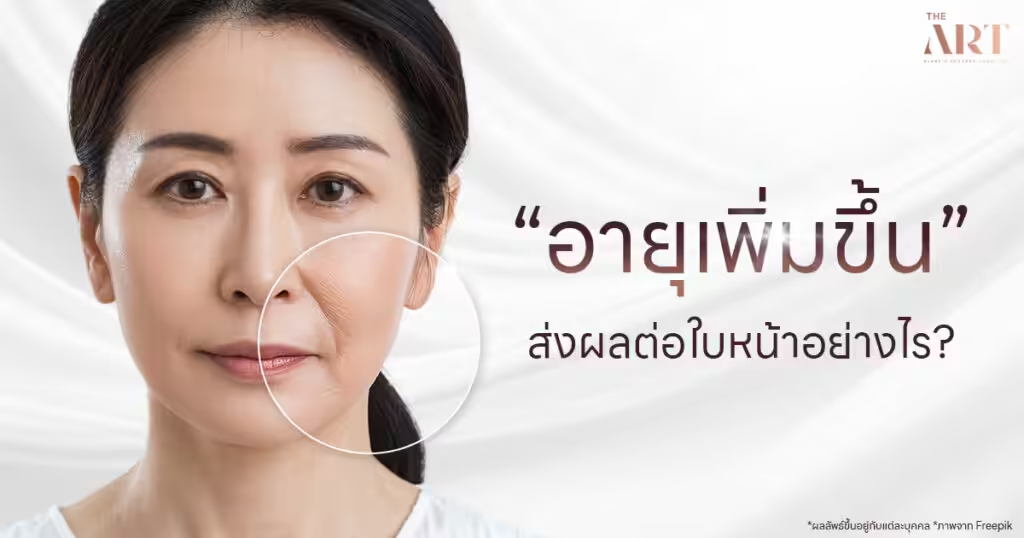
Our faces change continuously as we age, driven by multiple interacting factors, such as:
Reduced Skin Elasticity
Over time, collagen and elastin production in the skin decreases, causing the skin to lose its elasticity and firmness. The skin may become thinner, develop wrinkles more easily, and recover more slowly than in younger years. External factors such as sun exposure or lifestyle habits may also accelerate these changes.
Changes in Facial Fat
Facial fat plays a role in creating balance and fullness. As we age, some facial fat may decrease, while other areas shift downward due to gravity — causing the face to appear hollow in certain areas and saggy in others, such as the lower cheeks or jawline.
Changes in Facial Bone Structure
The bone structure serves as the foundation of the face. With age, changes may occur in certain areas of the bone, affecting the support of the overlying tissues — which can alter the appearance of the face and make sagging more noticeable in certain areas.
How Many Layers Does Facial Skin Have? How Do They Relate to Sagging?
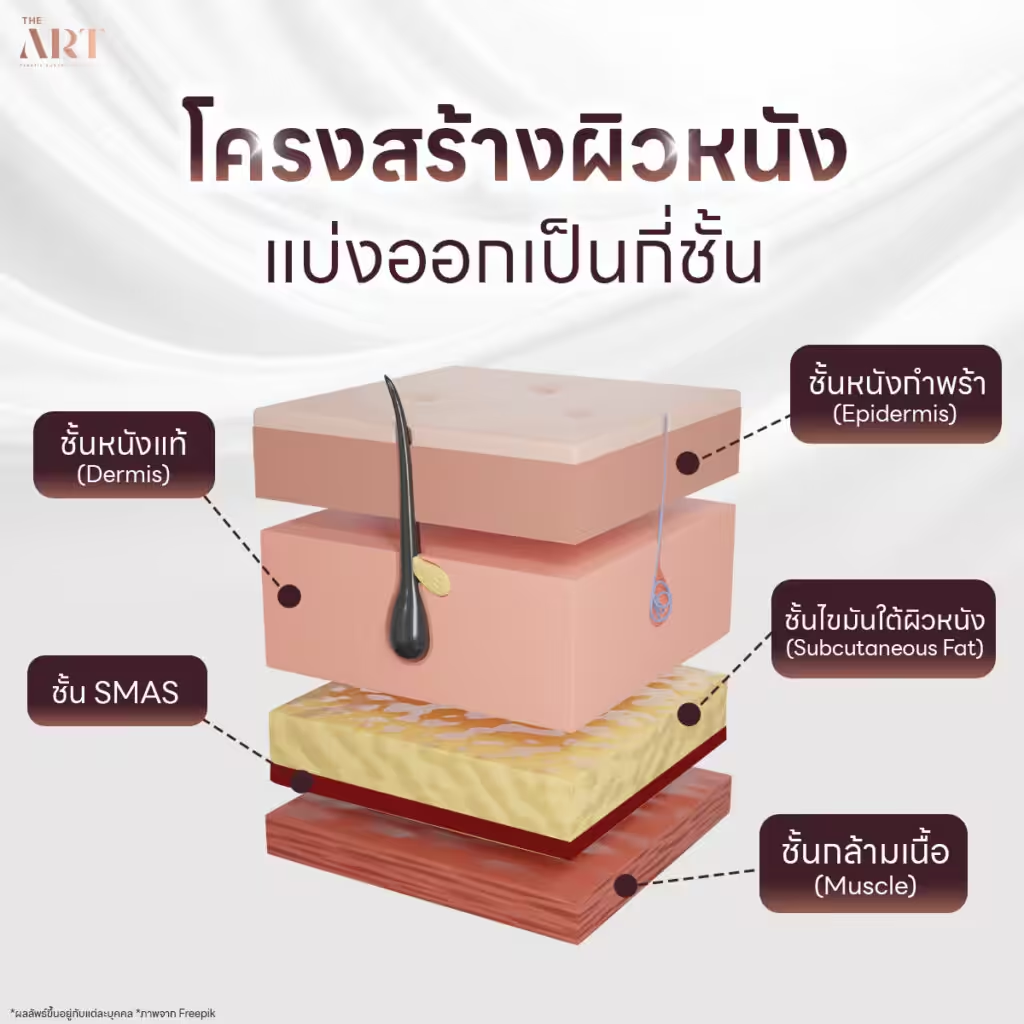
Beyond the skin’s 3 layers, the face contains deeper structures including the SMAS layer and underlying muscles — both of which play key roles in facial firmness, facial movement, and overall facial expression.
Epidermis (Outer Skin Layer)
It is the outermost layer of skin, acting as the first barrier against external factors such as sunlight, pollution, and pathogens. It also determines skin tone. As we age, cell turnover slows down, making the skin look dull or uneven in tone.
Dermis (Middle Skin Layer)
The middle layer containing collagen, elastin, blood vessels, nerve endings, and other components. Collagen and elastin are responsible for skin’s firmness and elasticity. As we age, production of these proteins decreases, leading to loss of firmness and easier formation of wrinkles.
Subcutaneous Fat Layer
Provides volume and fullness to the face while supporting the structures above. As we age, this layer may thin in some areas or shift downward due to gravity — causing the face to appear hollow in certain spots and contributing to sagging.
SMAS Layer (Superficial Musculo Aponeurotic System)
The SMAS lies beneath the fat, connecting muscles and fascia. It acts as a bridge between the skin and the muscles of the face, and is a key structure that determines facial firmness. When the SMAS weakens and sags, it can cause deeper sagging such as jowls or deep folds.
Muscle Layer
The deepest structural layer responsible for facial expressions such as smiling, frowning, or showing various emotions. Facial muscles work together with the SMAS and skin. As the overall structure changes over time, the facial contour and expressions change along with it.

What Is the SMAS Layer and How Does It Relate to Facial Structure?
Anatomical Characteristics of the SMAS Layer
The SMAS is a structural layer that connects the skin and underlying muscles, acting as a link for transmitting facial movement and expressions.
How the SMAS Layer Changes with Age
As we age, the SMAS layer may develop laxity and sagging, causing the tissues to shift downward — resulting in changes such as jowls or deeper folds.
Why Does Endoscopic Facelift Address the SMAS Layer?
Because the SMAS is a key structural layer connecting the skin and muscles, when it weakens with age, it can cause the face to sag, develop jowls, or become less defined.
Tightening only the outer skin cannot address the deeper facial support structures. Therefore, an Endoscopic Facelift targets the SMAS layer to help restore the overall facial structure more naturally — in harmony with each individual’s anatomy (results vary per individual).

What Concerns Can an Endoscopic Facelift Help Address?
An Endoscopic Facelift targets lifting at the deep SMAS level, which may help address multiple facial concerns at their source — not just the outer skin surface.
- Sagging skin and loss of firmness — such as sagging cheeks or jawline, resulting from changes in skin, fat, and facial support structures
- Facial contour changes and loss of definition over time — as tissues shift, the face may appear less defined or different from its youthful appearance
- Facial appearance that looks older or more tired — particularly in areas such as the cheeks, under-eye area, or midface that show age-related changes
- The face appears tired or older-looking — particularly around the outer corners of the eyes, forehead, or midface, which are common areas prone to sagging
- Structural changes such as SMAS layer laxity or changes in facial bone structure — affecting tissue support throughout multiple layers
Who Is a Good Candidate for Endoscopic Facelift — and Who Is Not?
Suitability varies by individual and should be assessed by a physician before making a decision.
Who May Be Suitable for Endoscopic Facelift
- Those who are beginning to notice moderate sagging — such as sagging cheeks, jawline, or early loss of firmness, which is often related to deeper tissue changes
- Those who require lifting at the structural level, not just the skin — suitable for individuals whose concerns involve multiple facial layers including the SMAS
- Those with noticeable volume loss in certain areas of the face — such as a significantly sunken midface, hollow under-eyes, or deep folds
- Those who require small incisions and minimal scarring — as the technique places incisions along the hairline
Who May Not Be Suitable for Endoscopic Facelift
- Those with very severe sagging — may require procedures with a wider range of structural adjustment
- Those with certain health conditions or factors that may affect surgery — such as blood clotting disorders or use of medications that affect the procedure
- Those who cannot follow post-operative care instructions — such as being unable to rest, avoid certain activities, or follow medical advice during the initial recovery period
Things to know before deciding on endoscopic facelift surgery.
- Information on the procedure and its limitations — Endoscopic Facelift is a medical procedure with certain limitations and suitability criteria. Not everyone is a candidate, so a physician consultation and assessment is required.
- Results may vary — outcomes can differ based on individual factors including age, facial structure, skin condition, and post-operative care
- The importance of physician assessment — to help identify a suitable approach based on each individual’s facial structure and specific concerns

Post-Operative Care After Endoscopic Facelift
After an Endoscopic Facelift, self-care is an important part of the recovery process. Key guidelines to follow include:
- In the first 48 hours, keep the head elevated and apply cold compresses to reduce swelling and bruising
- After surgery, avoid sleeping face-down to reduce swelling
- Avoid touching, pressing, or massaging the face during the first 2–4 weeks
- Avoid activities that may impact the wound, such as strenuous exercise, for 3–4 weeks
- For the first 2–4 weeks, avoid heat-generating devices and direct sunlight
- Get adequate rest to allow the body to heal naturally
- Take medication as prescribed, such as antibiotics and anti-swelling medication, and follow the wound care regimen
- Attend scheduled follow-up appointments so the physician can monitor recovery and provide additional guidance
Summary: What Is an Endoscopic Facelift?
Endoscopic Facelift is a facial lifting technique that works at a deep level, including the SMAS layer and underlying muscles. This approach aims to understand facial structure thoroughly and create individualized treatment planning tailored to each person’s unique anatomy and physician assessment.
You can read more information about Endoscopic Facelift procedures at the link below.
Frequently Asked Questions (FAQ)
ศัลยกรรมดึงหน้าส่องกล้องต้องพักฟื้นนานไหม?
ระยะเวลาการพักฟื้นอาจแตกต่างกันในแต่ละบุคคล ขึ้นอยู่กับหลายปัจจัย เช่น สภาพร่างกายและการดูแลหลังทำ โดยทั่วไปอาจมีอาการบวมในช่วงแรก และค่อย ๆ ดีขึ้นตามระยะเวลา ควรปฏิบัติตามคำแนะนำของแพทย์อย่างเคร่งครัด
ศัลยกรรมดึงหน้าส่องกล้องมีความเสี่ยงหรือไม่?
ศัลยกรรมดึงหน้าส่องกล้องเป็นหัตถการทางการแพทย์ จึงมีความเสี่ยงเช่นเดียวกับการผ่าตัดอื่น ๆ เช่น อาการบวม ช้ำ หรือความไม่สบายผิวในช่วงแรก ทั้งนี้ระดับความเสี่ยงขึ้นอยู่กับหลายปัจจัย และควรปรึกษาแพทย์เพื่อรับข้อมูลที่เหมาะสม
ผลลัพธ์ของศัลยกรรมดึงหน้าส่องกล้องอยู่ได้นานแค่ไหน?
โดยทั่วไปผลลัพธ์อยู่ได้นาน 5–10 ปี ทั้งนี้ขึ้นอยู่กับหลายปัจจัย เช่น อายุ โครงสร้างใบหน้า พฤติกรรมการใช้ชีวิต และการดูแลหลังทำ (ผลลัพธ์ขึ้นอยู่กับแต่ละบุคคล)
ศัลยกรรมดึงหน้าส่องกล้องต้องเตรียมตัวอย่างไร?
ก่อนเข้ารับบริการควรเข้ารับการประเมินจากแพทย์ เพื่อวางแผนการรักษาและตรวจสอบความพร้อมของร่างกาย นอกจากนี้ควรปฏิบัติตามคำแนะนำ เช่น การงดยาที่มีผลต่อการแข็งตัวของเลือด งดสูบบุหรี่และดื่มแอลกอฮอล์ หรือการเตรียมตัวด้านสุขภาพตามที่แพทย์แนะนำ
หากยังไม่เคยทำศัลยกรรมมาก่อน สามารถเริ่มด้วยดึงหน้าส่องกล้องได้หรือไม่?
ผู้ที่ไม่เคยทำศัลยกรรมมาก่อนสามารถเข้ารับการปรึกษาเพื่อประเมินความเหมาะสมได้ โดยแพทย์จะพิจารณาจากสภาพผิว โครงสร้างใบหน้า และระดับความหย่อนคล้อย เพื่อแนะนำแนวทางที่เหมาะสมของแต่ละบุคคล
Consult a doctor at The Art Hospital for free. No charge.
The medical team at The Art Hospital is happy to provide a consultation at no cost to assess your individual needs.
Facebook:The Art Hospital & Clinic
Line:@thearthospital
Instagram:theart.hospital
TikTok:@theartclinicandhospital
YouTube:The Art Clinic & Hospital
Call Center: 02-666-4666
References
- American Society of Plastic Surgeons. (n.d.). Facelift (rhytidectomy). https://www.plasticsurgery.org/cosmetic-procedures/facelift
- Hu, X., Ma, H., Xue, Z., Qi, H., & Chen, B. (2017). Endoscopic facelift of the frontal and temporal areas in multiple planes. Singapore medical journal, 58(2), 107–110. https://doi.org/10.11622/smedj.2016041