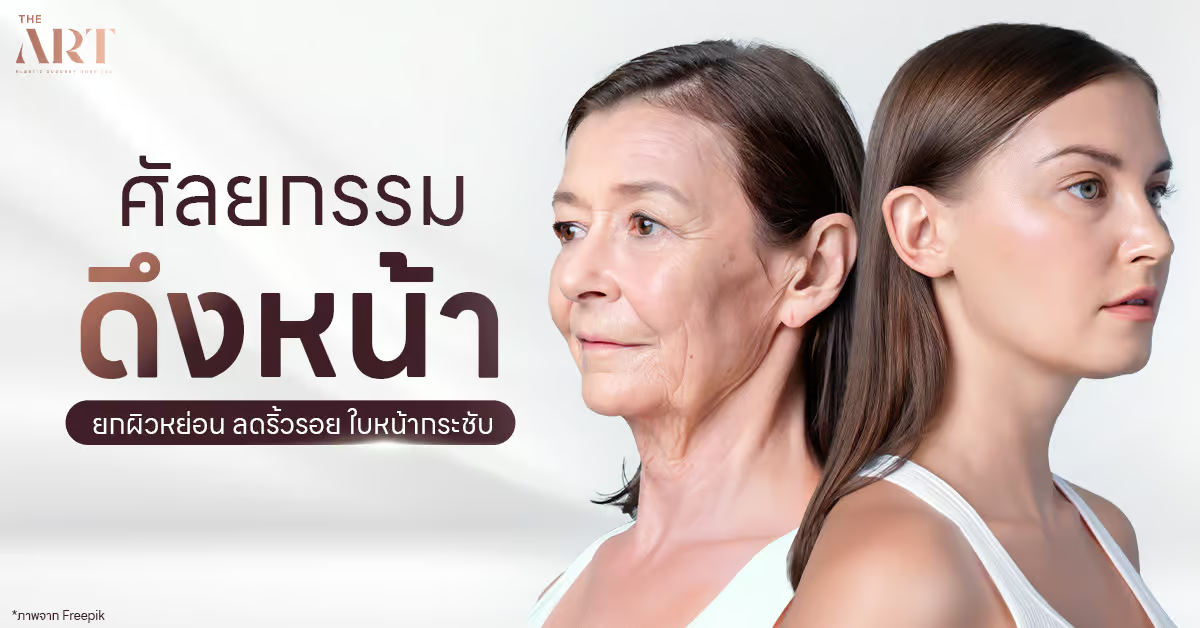
As we age, facial changes aren’t limited to just sagging skin; they also include internal structural changes such as muscles, tissues, and bones, resulting in a less firm appearance.
One medical approach used to help lift and tighten the face is endoscopic facelift , a technique that uses small endoscopes to allow doctors to see the internal structures more clearly and work on the deeper layers of the face.
Key Takeaways
- Endoscopic facelift is a technique that uses an endoscope to access deep facial structures, such as the SMAS layer, to reposition tissues.
- Facial sagging is caused by a combination of factors, including skin, fat, muscle, and bone structure.
- The treatment procedure involves planning, making small incisions, and adjusting internal structures according to each individual’s needs.
- The suitability of endoscopic facelift surgery depends on the severity of the problem, facial structure, and the doctor’s assessment.
- Preparation and post-procedure care play a crucial role in recovery and long-term results.
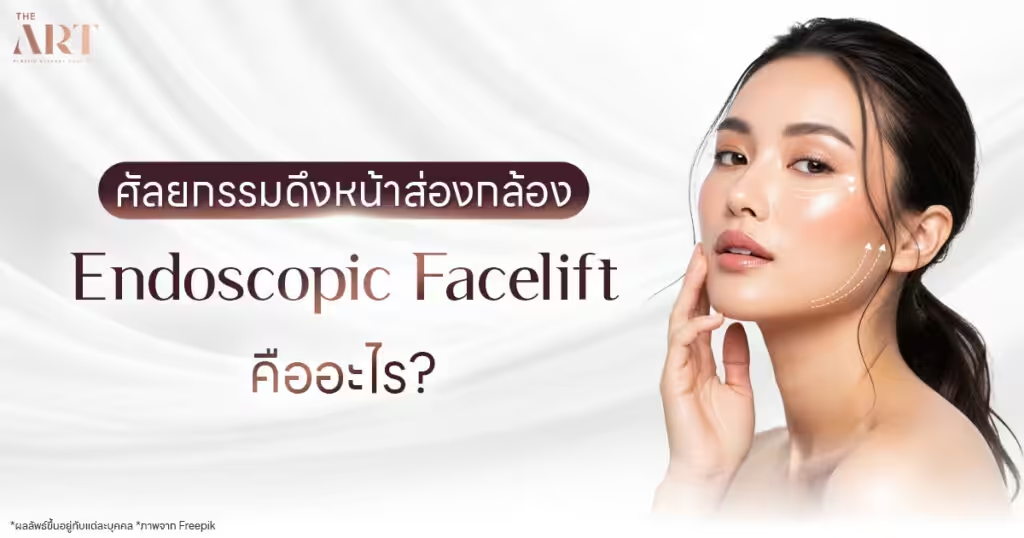
What is an endoscopic facelift?
Endoscopic facelift is a procedure to lift and tighten the upper face, cheeks, and eyelids. A small endoscope is inserted through 2-5 hidden incisions in the hairline (above the temples), separating deep tissue layers down to the SMAS layer. Endotine is then used to anchor the muscles, resulting in minimal scarring, almost invisible scars, less swelling and bruising, a shorter recovery time, and natural-looking results.
The key features of endoscopic facelift surgery are as follows:
A microscope is used to visualize the structures beneath the skin.
It allows doctors to see the details of the muscle layers, tendons, and internal tissues more clearly, which helps in positioning the lifting devices in endoscopic facelift surgery to be appropriate for each individual’s facial structure.
Make a small incision in a hidden location.
The scar is placed in the hairline or scalp (above the temples), which helps to minimize its visibility. The appearance of the scar and recovery will vary from person to person.
The focus is on repositioning the tissue, not just pulling the surface skin.
It can access deeper layers of the face, such as muscles and supporting tissues (SMAS), making lifting approaches more focused on internal structure.
It is commonly used on the upper and middle areas of the face.
For example, the forehead, the corners of the eyes, or the upper cheeks are areas that can be easily accessed with an endoscope.
The results depend on several individual factors.
Factors such as age, skin condition, facial structure, and post-procedure care should be evaluated by a doctor before making a decision.
Endoscopic facelift surgery procedure.
Generally, the endoscopic facelift procedure involves several consecutive steps, from assessment to wound care. The details may vary from person to person, depending on the doctor’s treatment plan.
Step 1 — Assessment and Treatment Planning
Before undergoing endoscopic facelift surgery, the doctor will perform a detailed assessment of the facial structure, including the degree of skin sagging, the location of tissues, and the overall facial proportions. This is to analyze the problems at each point and plan the surgical incisions (usually in the temples or hairline).
Step 2 — Anesthesia administered by an anesthesiologist.
During surgery, anesthesia will be administered under the supervision of an anesthesiologist to help prevent the patient from feeling anything during the procedure. The method of administration will depend on the treatment plan and the physician’s discretion, with vital signs closely monitored throughout the surgical process.
Step 3 — Making a small incision in the appropriate location.
The doctor will make several small incisions, typically 2–5, in areas where they can be hidden, such as the hairline or scalp. The incisions are small and designed to blend in with the hairline to minimize later noticeability. The appearance of the incisions depends on the individual case.
Step 4 — Using a microscope to separate the tissue layers (SMAS layer).
After making an incision, the doctor will insert an endoscope to visualize the structures beneath the skin in detail. During this procedure, tissue layers such as the skin, muscle, and SMAS layer are carefully separated to allow for proper repositioning.
Step 5 — Lifting and repositioning the facial structure.
Once the tissue layers are separated, the doctor will lift the tissue that has become displaced with age back into a more appropriate position. This depends on the technique and discretion of the doctor in each individual case.
Step 6 — Wound closure and post-operative care.
After the tissue has been properly positioned, the doctor will close the wound with an appropriate suture technique, trying to hide the scar in the hairline, making it virtually invisible from the outside. The patient will receive instructions on wound care, such as cleaning, rest, and avoiding certain activities.
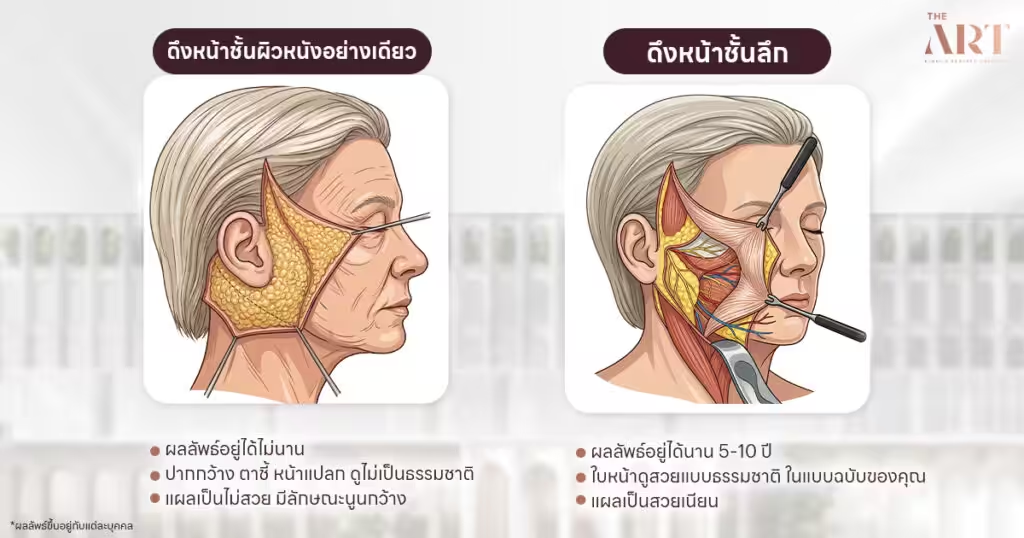
How does endoscopic facelift differ from a traditional facelift?
Although both methods aim to lift and tighten the face, their approaches differ, as shown in the comparison table below.
| section | Conventional facelift | Endoscopic facelift |
|---|---|---|
| Visible structure | Through direct examination by a doctor. | The SMAS layer is clearly visible through an endoscope. |
| Wound size | It may be longer in some techniques. | Two to five small lesions hidden in the hairline. |
| Work floor | Focus primarily on the upper layer of skin. | Restructuring down to the SMAS layer. |
| Areas where it works well | Severe sagging | Forehead, corners of the eyes, upper cheeks (Midface) |
| naturalness | It depends on the technique used. | Deep restructuring, natural-looking results. |
Ultimately, the choice of the most appropriate method should depend primarily on the problem and the doctor’s assessment.

Why does the face sag as we age?
Before considering endoscopic facelift surgery, it’s important to understand the root cause of the problem. Facial sagging results from changes at multiple levels simultaneously, including:
1. Changes in the skin.
- Collagen and elastin decrease with age, causing the skin to lose elasticity and the ability to return to its original shape as well as before.
- The skin becomes thinner and drier, making it appear less firm and prone to wrinkles.
- The skin’s ability to recover is reduced, such as slower self-repair.
2. Changes in facial fat.
- Some fat is reduced, making the face appear thinner, especially around the cheeks and under the eyes.
- Some fat moves downward due to gravity, such as in the lower cheeks or along the jawline.
- An alteration in facial balance can change the appearance of the face.
3. Changes in muscles and tissues.
- The structures that support the face begin to sag, such as the SMAS layer, which plays a crucial role in facial support.
- Reduced tissue tension can cause the face to appear droopy or lead to more sagging skin.
What is bone resorption, and how does it relate to endoscopic facelift?
Bone resorption is a process of change in facial bones that can occur with age and affects the overall structure of the face.
Characteristics of bone resorption found in the face.
- Certain bone areas may collapse, such as around the eyelids, cheekbones, or jawline.
- The reduced tissue support structure results in the upper tissue lacking a base of support.
- The face appears sunken in certain areas, such as under the eyes or in hollow cheeks.
- The overall facial shape has changed, and the problem of sagging skin has become more apparent.
The importance of endoscopic facelift surgery.
For individuals with bone resorption problems, a conventional facelift may not be sufficient. This is because the problem isn’t solely at the surface but involves deeper structural elements. Therefore, access to deeper layers and structural adjustments using endoscopy are necessary to achieve optimal and natural-looking results.

Who is endoscopic facelift surgery suitable for?
Determining who is suitable for endoscopic facelift surgery requires considering the degree of sagging, facial structure, and individual expectations. Generally, it may be suitable for the following groups:
Those who are beginning to experience sagging skin and want to lift and firm it at a structural level.
This group may begin to notice changes in their face, such as sagging cheeks, deeper nasolabial folds, or a less defined jawline, which may be due to changes in the skin, fat, and SMAS layer.
Those who wish to have a facelift with minimal incisions.
Endoscopic facelift surgery involves making small incisions in locations that can be hidden, such as along the hairline or scalp, making it an alternative for those concerned about scarring.
People who have problems in the upper or middle part of their face.
For example, areas such as the forehead, corners of the eyes, or the upper cheeks (midface) are areas where changes occur due to gravity and sagging of the SMAS layer.
Those who understand that sagging skin is caused by multiple layers of skin, not just the top layer.
For example, individuals who understand bone resorption, or changes in the SMAS layer, can choose treatment approaches that are more tailored to the actual problem.
Those who can properly follow the doctor’s instructions.
Post-procedure care, such as rest, avoiding certain activities, and attending follow-up appointments, affects recovery and overall results.
Things to know before deciding on endoscopic facelift surgery.
Before deciding to use the service, you should consider the following information:
- Endoscopic facelift surgery is a medical procedure that carries risks. Like any other surgery, it may have side effects such as swelling, bruising, or skin discomfort in the initial period. The severity of symptoms and recovery time can vary from person to person.
- The results depend on several factors , such as age, skin condition, bone structure, and post-operative care. A medical evaluation will help provide a better understanding of the likely outcome.
- Recovery may take time, even with a small incision, as the body still needs time to adjust.
- Choosing a medical facility that meets standards and has properly licensed doctors can help reduce risks and increase peace of mind.
- It is advisable to consult a doctor first , as each individual has different facial problems and structures.

Preparation before endoscopic facelift surgery.
Proper preparation contributes to a smoother treatment process and reduces potential risks.
- Health check and physical assessment — Your doctor may consider a basic health check to assess your readiness, such as any pre-existing conditions or medications you are currently taking.
- Discontinue certain supplements or medications as advised by your doctor — such as those that affect blood clotting or some vitamins.
- Avoid alcohol and smoking — as these can affect recovery and wound healing.
- Prepare for your recovery period — such as scheduling rest or preparing a caregiver for the initial period.
Post-operative care for endoscopic facelift.
Post-procedure self-care is crucial for recovery and results. You should strictly follow your doctor’s instructions, as follows:
- Strictly follow your doctor’s instructions — such as taking medication, cleaning the wound, and attending follow-up appointments.
- Avoid activities that may put pressure on the wound — such as strenuous exercise or prolonged periods of bending your head down — in the initial period.
- Observe for any unusual symptoms — such as excessive swelling or severe pain. If you experience any, consult a doctor immediately.
- Take care of your overall health — get enough rest and eat nutritious food.
Conclusion
Endoscopic facelift is a medical technique that helps lift and tighten the face. It can access deeper facial structures better than skin lifting alone. Considering factors such as bone resorption and the SMAS layer, it’s clear that facial sagging results from a combination of internal structural issues.
Therefore, choosing the appropriate treatment approach should be based on a medical evaluation to suit individual facial structure and needs (results vary depending on the individual).
Frequently Asked Questions about Endoscopic Facelift Surgery (FAQ)
Is endoscopic facelift surgery painful?
The level of pain varies from person to person, depending on several factors such as the procedure and the body’s response. During the surgery, you will receive anesthesia under the supervision of an anesthesiologist.
How long is the recovery period after an endoscopic facelift?
It may take approximately 5–7 days for the main swelling and bruising to gradually subside. You can return to light work within 1–2 weeks, and you should avoid strenuous exercise for about 2 weeks. (Results may vary depending on the individual and post-operative care.)
How long do the results of an endoscopic facelift last?
The results can last up to 5–10 years, depending on several factors such as age, skin structure, and lifestyle habits (results vary from person to person).
How does endoscopic facelift differ from a traditional facelift?
Endoscopic facelift uses an endoscope to clearly visualize the SMAS layer structures. It involves making only 2–5 small incisions and focuses on adjusting deep-level structures, whereas conventional facelifts may focus on the upper layers of the skin and may have longer incisions in some techniques.
Consult a doctor at The Art Hospital for free. No charge.
The medical team at The Art Hospital is happy to provide a consultation at no cost to assess your individual needs.
Facebook:The Art Hospital & Clinic
Line:@thearthospital
Instagram:theart.hospital
TikTok:@theartclinicandhospital
YouTube:The Art Clinic & Hospital
Call Center: 02-666-4666
References
- American Society of Plastic Surgeons. (n.d.). Facelift (rhytidectomy). https://www.plasticsurgery.org/cosmetic-procedures/facelift
- Cleveland Clinic. (n.d.). Facelift: What it is, types, procedure & recovery. https://my.clevelandclinic.org/health/treatments/11040-facelift
- Plastic Surgery Key. (n.d.). Endoscopic forehead and midface lift. https://plasticsurgerykey.com/15-endoscopic-forehead-and-midface-lift/